God and the Multiverse
Though it was at one time little more than an obscure scientific term, the multiverse has grown in cultural awareness in recent years. Recent scientific research hints that our universe may be part of a much bigger multiverse of imagination-staggering immensity—a prospect that has echoed in interesting ways throughout our society. From the widely successful Marvel superhero movies, which use alternate timelines and trans-dimensional travel as central plot devices, to the frontiers of theoretical physics and string theory, the idea of a multiverse has powerfully shaped our view of the world around us.
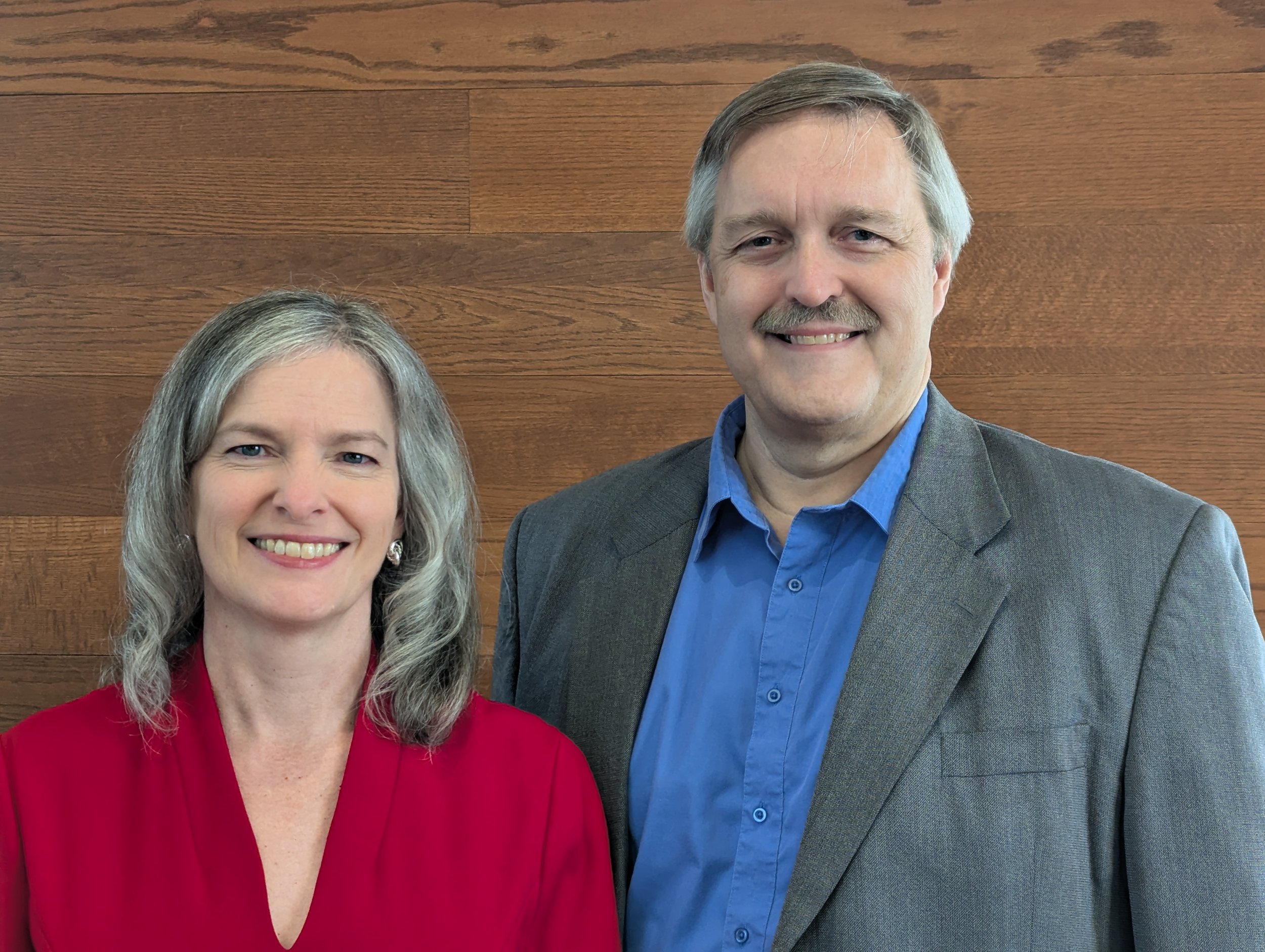
What are we to make of this dizzying potential reality, both as citizens of the twenty-first century and as Christians? Join us for a video of Deborah Haarsma's presentation in February 2022, in which she explores the spiritual as well as scientific implications of recent discoveries and models to provide the continual bridgework between Christian faith and modern science. Then join physicists Loren Haarsma and Deborah Haarsma for a live ZOOM discussion of these fascinating questions.
Dr. Deborah Haarsma is an astrophysicist, author, and the Executive Director of the International Network for Christian Higher Education. She served as President of BioLogos from 2013-2024, and is a frequent speaker at universities, churches, and conferences on science and Christian faith. She is the co-author of the book Origins: Christian Perspectives on Creation, Evolution, and Intelligent Design and contributed chapters to several books, including Christ and the Created Order. Previously, Haarsma had a 20-year career in astrophysics research and was professor and chair of the Physics & Astronomy department at Calvin University. She earned a PhD at the Massachusetts Institute of Technology and Bachelor degrees in physics and music at Bethel University in Minnesota.
Dr. Loren Haarsma is a Professor of Physics at Calvin University. He did his undergraduate studies at Calvin, earned a Ph.D. in physics from Harvard University doing experimental atomic physics, and then did five years of postdoctoral research in neuroscience before returning to Calvin to teach. His scientific research is studying the biophysical activity of ion channels in living cells and artificial lipid membranes, and computer modeling of self-organized complexity. He also studies and writes on topics at the intersection of science, philosophy, and Christian theology. He is co-author of the book Origins: Christian Perspectives on Creation, Evolution, and Intelligent Design, and author of When Did Sin Begin? Human Evolution and the Doctrine of Original Sin.